Showing posts with label Italy. Show all posts

Saturday, April 9, 2011

The Roman Forum - Rome, Italy

The Temple of Saturn and the Forum - Rome, Italy

While in Rome, we joined a walking tour of the Roman Forum, the Palatine Hill and the Colosseum with the hope of getting to know a bit more about the history of the area. We joined a tour which was recommended by the people running the B&B we stayed at. We got off to a bad start as the guide got half an hour late and unfortunately things didn't get any better. The whole tour felt as though the guide was just regurgitating a script which she had memorised.

More photographs after the jump.

The Forum with the Colosseum in the Background - Rome, Italy

Since the tour was a massive disappointment, we bought a book which documented the forum and, using it as a guide, walked around the Forum again the next day. It was a bit like walking around in Anuradhapura but with a hell of a lot more people!

The Temple of Antoninus & Faustina - Rome, Italy

Walking around the forum on our own gave me the opportunity to take a bit more time to do a bit of photography. We were there close to midday so the light wasn't the best. I had a circular polariser on the camera which let me capture deeper shades of blues and greens. Although I lost 2 stops using the polariser, I didn't need to use the tripod. The hardest part of photographing the Forum, in my opinion, was getting photographs without people being included in the frames.

A Marble Carving in the Forum - Rome, Italy

I'm planning on heading back to Sri Lanka for a holiday in July. I'm hoping to do a fair bit of wildlife photography while I'm there. I am also planning on heading back to Anuradhapura and probably traveling in the hills as  well. I'm sure the photographs will find their way onto the blog eventually!

Friday, March 11, 2011

The Trevi Fountain - Rome, Italy

The Trevi Fountain - Rome, Italy
The Trevi Fountain - Rome, Italy 

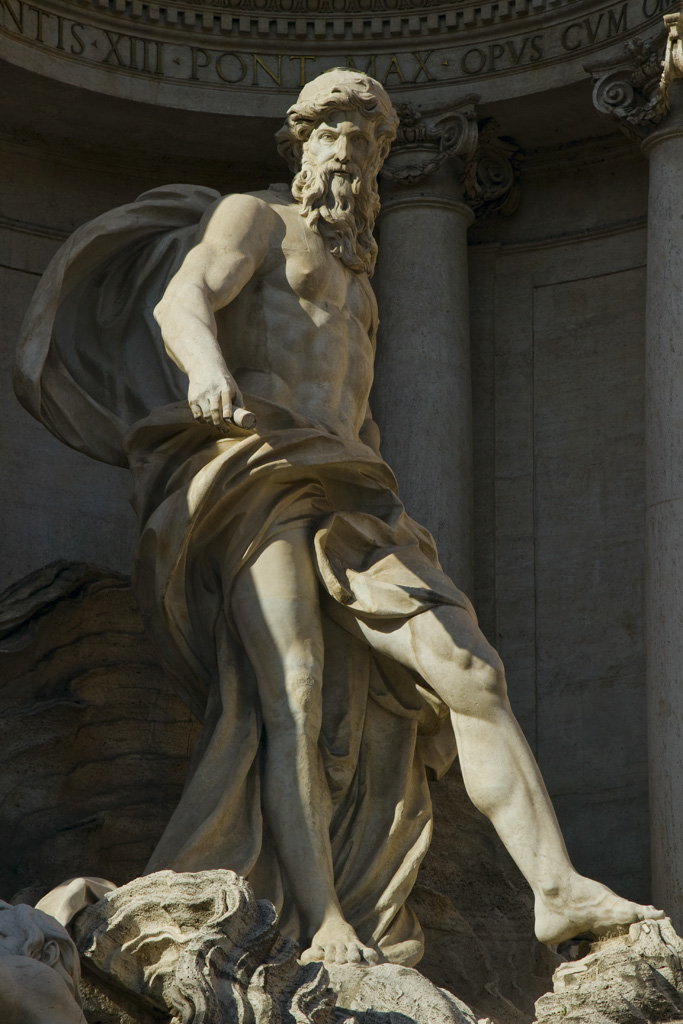
The Trevi fountain is probably the most famous fountain in the world. It was built at the termination point of an ancient aqueduct named Aqua Virgo and is named after the fact that it was built at the junction of three roads (tre vie). Legend has it that Roman technicians located a source for fresh water, about 13 km away from the city with the the help of a virgin. This scene is depicted on the facade of the fountain.

More photographs inside.

Detail of the Trevi Fountain - Rome, Italy

The fountain was one of the first places we visited and, as expected, there was a huge crowd seated on the steps around the fountain and taking it all in. Getting a decent photograph of the entire fountain was virtually impossible as there were people constantly walking into the frame. As a result, I resorted to taking a number of "detail" shots of smaller sections of the fountain.

Detail of the Trevi Fountain - Rome, Italy

We got to the fountain at about four in the evening and the light was pretty good for photography. It was warm, directional light which gave a lot of depth to the photographs. I think we spent around an hour at the fountain photographing small sections of it. A photograph of the entire fountain was on my shot list but there was no way that I was going to capture it that day.

Detail of the Trevi Fountain - Rome, Italy

To get the shot of the entire fountain (first photograph on this post) I decided to make an early start. I got to the fountain at around 5.30 in the morning and found the place empty. I spent about 40 minutes alone at the fountain, photographing it from a whole range of angles before other photographers started to arrive.


Sunday, February 27, 2011

The Fish Markets - Venice, Italy

The Fish Markets - Venice, Italy
The Fish Markets - Venice, Italy 

The Veince fish and fresh food markets were established in 1097 and have provided Venetians and tourists with their daily supplies of seafood, fruit and veggies since then. The markets, which are on the Grand Canal close to the Rialto bridge, open at dawn when the barges arrive and most of the stalls close by midday. As with most things in Venice, the markets provide photographers with yet another opportunity to spend a couple of hours capturing the goings on.

A vendor at the Fish Markets - Venice, Italy

The variety of fish and seafood on sale was amazing. Apart from a huge selection of fish, vendors were selling octopus, shrimp, crab, prawns and a number of other species of shell fish. We got to the markets at around 7.00 AM and found them already buzzing with activity as the locals did their daily shopping before heading off to work. The markets attract a number of tourists and quite a few companies offer tours and teach visitors how to compare the different varieties of fish that are available.

A vendor setting up a stall at the Fish Markets - Venice, Italy

The markets are closed on Mondays and the locals often advise people not to eat fish on Mondays as it is unlikely to be fresh. To give you some idea of the amount of seafood moving through the markets consider the fact that the local population of Venice is around the 60,000 mark and 20,000,000 visitors pour in to Venice each year. The majority of the seafood consumed by these people is sourced at these markets.

Scallops at the Fish Market - Venice, Italy

We wandered around the markets for about two hours, observing the goings on and photographing the activity. We used a combination of the Canon 7D and the 24-105mm lens and the Canon 400D and the 50mm lens to photograph the markets.

Produce at the markets - Venice, Italy

Zucchini Flowers - Venice, Italy

Friday, January 14, 2011

Murano Glass - Venice, Italy

A glass maker working on a vase - Murano, Italy
A glass maker working on a vase - Murano, Venice, Italy

Murano, a group of small islands situated about fifteen minutes by vaporetto from St Marks square, is famous for its glass makers. Glass making start in Murano in 1291 when the Venetian republic ordered all glass makers off the main islands fearing the foundries would would cause fires and destroyed the wooden buildings in Venice. Today, glass making remains the main industry on the island.

More images after the jump.

A glass vase being heated in a furnace - Murano, Venice, Italy

We visited Murano for a few hours while we were in Venice and browsed through a number of shops selling every type of glassware imaginable - from vases and liqueur glasses to glass beads and figurines as lamps and chandeliers. The manager of one of the larger shops we stopped at, offered to take us around the glass factory on the premises which supplied the store. We were keen to see the factory and accepted his invitation despite knowing that we would be expected to buy something from his store.

The finishing touches on a long vase - Murano, Italy
The finishing touches on a long vase - Murano, Venice, Italy

The factory was comprised of a number of small teams, each around 4 people strong which specialised in a particular type of glassware. One team constructed chandelier pieces, while another specialised in vases and yet another produced drinking glasses. Each team was led by a master craftsman who guided the other team members through the process of heating the glass and shaping the objects. Each member of the team was assigned a specific task in the manufacturing process.

Another vase taking shape - Murano, Italy
Another vase taking shape - Murano, Venice, Italy

We spent about twenty minutes in the factory before returning to the gallery to browse through the products and choose our souvenir of Murano.

All the images on this post were captured with a Canon 7D and the 24-105mm lens.

Monday, November 29, 2010

Castel Sant' Angelo - Rome, Italy

Castel Sant' Angelo - Rome, Italy

Castel Sant' Angelo was built to be used as Emperor Hadrian's family mausoleum between 135 AD and 139 AD. It has since been used as a fortress, Papal residence and a military prison. The building is cylindrical in shape and a wide stone ramp winds its way from the ground floor to the upper terraces. The building consists of a number of passageways and Papal apartments as well as old dungeons.

Read on for more images and info.

Castel Sant Angelo across the Tiber - Rome, Italy

The highest point of the building, the Terrazza dell'Angelo, is crowned by a statue of the archangel Michael shielding his sword. The statue is supposed to be protecting Rome from the plague. The Terrazza is also where Floria Tosca throws herself off the ramparts in Puccini opera Tosca. An escape passage, named Il Passetto, leads to Castel Sant' Angelo from St Peter's Basilica and was used by Popes when they needed to make an escape from the Basilica.

Castel Sant' Angelo across the Tiber - Rome, Italy

Castel Sant' Angelo also features in a number of films including Dan Brown's Angels and Demons where it was the last existing church of the Illumnati.

We stayed close to Castel Sant' Angelo  and St Peters Basilica while we were in Rome. I made a couple of trips to both St Peters and Castel Sant' Angelo in the night to get a few images of the buildings lit up. I thought it was the best time to head out with the camera as there weren't too many people around and I was able to photograph both buildings without people walking into the frame.

Castel Sant' Angelo - Rome, Italy

All the images on this post were captured with a Canon 7D and a 24-105mm Lens.

Tuesday, November 23, 2010

Gondolas and Gondoliers

A Gondolier waiting for a hire - Venice, Italy
A Gondolier waiting for a hire - Venice, Italy 

No trip to Venice is complete without a Gondola ride. The traditional flat bottomed rowing boat has been used on the Venetian lagoon for centuries. Although they were once the main mode of transport along the canals, they are now used for tourist rides. The earliest references to the Gondola were made in 1094 when a venetian public official referred to it in a letter. They started appearing in Italian paintings in the 1490's in works by Carpaccio and Bellini. The boat has evolved over the last 1000 years into the sleek familiar shape that it is today.

More info after the jump.

A Gondola parked along a canal - Venice, Italy

Gondolas were fitted with a small cabin, named the felce, until the early 20th century. Its windows could be closed with louvered shutters, the original venetian blinds. Gondolas were originally symmetric in design but at the end of the 1800's an asymmetric design which allowed a single oarsman was adopted. The boats are made out of 8 different types of wood and consist of 280 pieces.

At the peak of its popularity in the 17th and 18th century there were between eight and ten thousand Gondolas navigating the canals of Venice.

Tourists on one of the Venetian Canals - Venice, Italy

Contrary to popular belief the Gondola is not poled like a punt. Instead, the Oarsman propels the boat with a forward stroke and a compensating backward stroke. The oar, which is made out of beech wood, and is held in place by an oarlock known as a forcola. The forcola is a complicated shape as it has to allow for different speeds and directions of strokes. The ornament at the front of the Gondola is referred to as the ferro and is serves as a counter weight for the Oarsman. The ferro is generally made out of iron, brass, stainless steel or aluminium.

A Gondoliers hat - Venice, Italy

The profession of "Gondolier" is controlled by a guild which issues a limited number of licenses. In order to obtain a license, the Gondolier must complete training and an apprenticeship as well as pass a comprehensive exam. During this exam the applicants  knowledge of Venetian history, landmarks and foreign languages and practical skills in handling a Gondola are tested.

A Gondola navigating a canal - Venice, Italy

Gondola rides are available on almost every canal in Venice. We decided to take a ride along a few of the smaller canals as we wanted to avoid the Grand Canal which is constantly busy. The trip lasted around 40 minutes and we passed a number of famous landmarks on the way. These included Vivaldi's Palazzo as well as the Palazzo belonging to Marco Polo's family.

A Gondoliers hat - Venice, Italy

All images on this post were captured with the Canon 7D and the 24-105mm combo.

A Gondola navigates a Canal - Venice, Italy

Tuesday, November 9, 2010

Piazza Novona - Rome, Italy

A Balcony looking out onto Piazza Novona - Rome, Italy
A Balcony looking out onto Piazza Novona - Rome, Italy  

Piazza Novona, a ten minute walk from the pantheon, is probably Rome's most famous square. It actually sits on top of an ancient stadium built by Emperor Domitian in the first century AD. The track and field are said to have been used for competitions similar to the Greek olympics and during the Renaissance the stadium was often flooded for mock sea battles. 

More info and images after the jump.

Bernini's Fontana Quattro Fiumi in Piazza Novona - Rome, Italy

The square is also home to three famous fountains. The largest of these is Bernini's Fontana Quattro Fiumui (Fountain of the four rivers), shown above. The fountain is said to depict the four major rivers of the known continents: the Nile, the Ganges, the Plate and the Danube. Legend has it that the Bernini designed one of the statues (image below), facing the church of Saint Agnes (in the background of the image above), shielding his eyes from the "horror of the church" which was designed by his rival Borromini. In actual fact the church was built after the fountain.

Bernini's Fontana Quattro Fiumi in Piazza Novona - Rome, Italy

The solitary statue of Saint Agnes, above the facade of the church, turning away from Bernini's fountain when it would have normally faced the fountain. A small skull in the reliquary of the church is said to be that of Saint Agnes, who was beheaded in the stadium of Emperor Domitian in the 3rd century AD. 

Detail of Bernini's Fontana Quattro Fiumi in Piazza Novona - Rome, Italy

The other two fountains in the square are Fontana del Nettuno (Fountain of Neptune)  on the northern end of the piazza and Fontana del Moro (Fountain of the Moor) on the southern end. The Fontana del Moro, shown below, was designed by Giacomo della Porta consisted of a basin and four Tritons. In 1673 Bernini added a Moor (African) wrestling with a dolphin. 

Fontana della Moro in Piazza Novona - Rome, Italy

The basin of the Fontana della Nettuno was also designed by Giacomo della Porta in 1574 and is said to have been sponsored by Pope Gregory XIII.  For 300 years the fountain survived without any statues. The fountain we see today, with the statue of Neptune (shown below) was completed by Antonio della Bitta in 1878. 

Fontana della Nettuno in Piazza Novona - Rome, Italy

A number of restaurants open out onto the piazza which is also full of artist's stalls, street performers and tourists. Needless to say, it is quite crowded during the day. A Christmas market is held at the piazza  every year. The markets run well into the night and are said to be worth a visit. 

Tourists and the Church if Saint Agnes at Piazza Novona - Rome, Italy

All images on this post were captured with a Canon 7D and the 24 - 105mm lens.

A View of Piazza Novona - Rome, Italy

Saturday, October 30, 2010

The Leather School at Santa Croce - Firenze, Italy

A Leather craftsman working on a strap for a bag - Firenze, Italy
A Leather craftsman working on a strap for a bag - Firenze, Italy 

The Leather school at the church of Santa Croce (Scuola del Cuoio) in Firenze was started off by franciscan monks and the Gori and Casini families with the aim of giving orphans of World War II an opportunity to learn a trade from which to earn a living. The leather school has now expanded and is now a well known Florentine trading house and leather shop.

More info and images after the jump.


Engraving tools used by Leather craftsmen - Firenze, Italy

Historically, a number of industries which require large quantities of water have been based in the Santa Croce neighbourhood due to its proximity to the banks of the river Arno. These industries included tanneries, dyers and soap makers.

The growing demand for hand crafter leather goods saw the school opening it's doors to clients in 1950. The U.S. Airforce and the American embassies in Europe were amongst the schools first customers. The popularity of the schools products led to President Dwight Eisenhower using a desk which was hand crafted at Scuola del Cuoio in the oval office.

A Leather craftsman engraves a handbag - Firenze, Italy

We visited the Leather shop and factory after walking around the church of Santa Croce (pics in a future post). I spent some time wondering around the factory and having a look at how the craftsmen work (and take some photographs while I was at it). My wife looked through the factory and quite unsurprisingly,  found a bag she wanted to get. The image above is of a craftsmen engraving her initials on it.

A Leather craftsman's tools - Firenze, Italy

The counters where the craftsmen worked were very well lit but the rest of the factory was about two or three stops darker. From a photographic point of view, this was exactly what I was after. I was able to take a number of photographs where the main subject (both craftsmen and tools) was very well lit and the background was slightly darker. This ensured that there were no distractions in the frame while the underexposed background gave the image a context (the first image on this post in particular). I also didn't have my flash and shoot through umbrella with me at the time and, to be honest, I doubt I would have been able to setup any lights for photographs.

All images on this post were captured with the Canon 7D and the 24-105mm lens.

Thursday, October 21, 2010

The Colosseum - Rome, Italy

The Colosseum - Rome, Italy
The Colosseum - Rome, Italy 

The famous Flavian amphitheatre is one of the greatest works of Roman architecture and engineering. Situated in the centre of Rome, it is a "must see" for most tourists. We visited the Colosseum on a walking tour which also included the Roman Forum and the Palatine Hill. The tour itself was not very good but we did get an opportunity to walk around the Colosseum on our own at the end.

Read on for more info.

The Colosseum photographed from the Forum - Rome, Italy

The building was started by Vespasian, inaugurated by Titus in 80 A.D. and completed by Domitian. The Colosseum was used to hold gladiatorial contests, animal hunts, executions and re-enactments of battles. It was later used for housing, workshops and even a christian shrine. The tiers of the Colosseum were able to seat 50,000 spectators around the arena.

Inside the Colosseum - Rome, Italy

Below the wooden floor of the arena was a complex network of rooms, passageways and lifts used to move wild animals from their cages into the arena. The walls which support tiers of seats, passageways and stairways radiate out from the arena. Three tiers of arcades ring the outer edge of the building linking numerous stairways and facilitating the efficient movement of a large number of people. A canopy was suspended form the roof to provide shade. 

Exterior of the Colosseum - Rome, Italy

The arches on the ground floor were numbered to allow easy access to seats (some of the number are still visible). Boxes were provided on the North and South sides of the arena for the Emperor and the Vestal Virgins (these were the best seats). Flanking these boxes was reserved seating for the Senators. Some of their names can still be seen carved into the stone. The level above this was occupied by the non senatorial noble class. Ordinary Roman citizens occupied next level up. This level was further divided into two sections for the wealthy and the poor. Gravediggers, actors and former gladiators were banned from the Colosseum.

The Colosseum - Rome, Italy

Outside the amphitheatre stood the Colossus of Nero, a giant bronze statue measuring 30m in height. After the death of Nero the statue was modified to depict the sun god. The statue was last mentioned in the 4th century and only the foundations of the pedestal exist today. It may have been destroyed during the sack of Rome in 410 or in one of the earthquakes that occurred during the 5th century.  

The Colosseum - Rome, Italy

These images were captured with a Canon 7D and the 24-105mm lens. A tripod was used for all the night shots and a circular polariser was used for the others. It was a bit difficult to get a clear shot of the building in the night with cars driving past so I decided to include them in the frame.

Monday, October 11, 2010

Views of Firenze

Panoramic view of Firenze - Firenze, Italy
Panoramic view of Firenze - Firenze, Italy (Click to view a larger version)

On our first evening in Firenze we decided to wonder up to Piazzale Michelangiolo, which was a comfortable 3 km walk from our hotel in Oltrano. When we got up to the piazza, at around 4.30 in the afternoon, it was packed with tourists and I had a to wait a while before I could get up to the wall and set up my tripod. I had a bit of time until the light changed, so I wasn't too fussed.

The Panorama above was a 23 image stitch. The Ponte Vecchio can be seen on the left hand corner of the image while the Duomo (Basilica di Santa Maria del Fiore) is on the right. The tall bell tower in the centre of the image is Palazzo Vecchio.

Read on for more images and info.

The Duomo (Santa Maria del Fiore) - Firenze, Italy

The Duomo, which was built in 1296, is right in the middle of Florence and an image of it lit up at twilight and taken from Piazzale Micelangiolo was on my shot list. I ended up spending about 4.5 hours waiting for the light to change and as a result I've got a number of images of the Duomo in varying light conditions! This is one of my favourites as the Duomo really stands out while a bit of detail is visible in the background. The fact that the buildings around the Duomo are comparatively dark also helps isolate it. I will cover the Duomo and a bit of its history in a later post.

The Ponte Vecchio - Firenze, Italy

The Ponte Vecchio is one of the most famous landmarks in Firenze. It is a medieval bridge that spans the Arno at its narrowest point. The bridge is first mentioned in documents dated to 996. It is famous for having shops along both sides of it. These shops were initially occupied by butchers but they are now jewellery stores. The bridge that appears further downstream from the Ponte Vecchio is the Ponte Santa Trinita. I'll share more images of the Ponte Vecchio in a future post.

The Duomo & Santa Croce - Firenze, Italy

The image above is of Santa Croce and the Duomo. The Arno can also be seen in the foreground. The Basilica of Santa Croce is the main Franciscan church in Florence. It is also the burial place for a number of famous Italians including Michelangelo, Galileo and Machiavelli. The church is home to a number of frescoes painted by Giotto and art works painted by Canova, Donatello and Vasari. The Franciscan friars also founded a leather school on the premises. The school / factory is still in operation and a store is open to visitors. More images of the leather factory and Santa Croce will be uploaded in future posts.

All these images were taken with a Canon 7D and a 24-105mm lens from Piazzale Michelangiolo.